
Maximizing Space: Innovative Small House Layout Ideas
Living in a small house doesn’t mean sacrificing comfort or style. In fact, with the right layout and design strategy, small homes can feel spacious, efficient, and even luxurious. Whether you’re downsizing, building a tiny home, or working with a compact urban space, innovative small house layouts are key to maximizing every square foot.
In this guide, we explore space-saving ideas, layout types, and smart design solutions to help you make the most of your small home.
Why Smart Layouts Matter in Small Homes
The layout of a small home can make the difference between feeling cramped or feeling cozy and efficient. A smart floor plan uses space effectively by:
- Reducing wasted square footage
- Improving natural light and ventilation
- Creating flexible, multi-use zones
- Enhancing storage solutions
- Ensuring smooth flow and circulation
Maximizing space starts with intentional design. Every inch counts.
Key Principles for Small House Design
Before jumping into layout ideas, consider these essential principles that guide effective small home design:
Open Floor Concepts
Eliminating unnecessary walls between the kitchen, living, and dining areas creates a more open and expansive feel. Open floor plans enhance light flow, reduce visual clutter, and allow for multifunctional spaces.
Vertical Space Utilization
In small homes, going up is often better than going out. Tall ceilings, loft spaces, vertical shelving, and hanging storage systems help you capitalize on underused height.
Multipurpose Furniture and Spaces
Rooms—and even furniture—should serve more than one function. Think: a guest bedroom that doubles as a study, or a kitchen island that also serves as a dining table.
Built-In Storage
Built-in cabinets, under-bed drawers, wall niches, and hidden compartments can add storage without eating into your living space.
Innovative Small House Layout Ideas
Here are some creative layout ideas designed to maximize space and function in a small home.
1. Studio Layout with Zoned Living Areas
A single open room can feel spacious and still offer dedicated living zones. Define different areas using rugs, furniture arrangement, or half-partitions. Place the bed in a cozy nook or behind a sliding screen to provide separation without full walls.
Best for: Singles or couples in urban apartments or tiny homes.
2. Lofted Bedroom Design
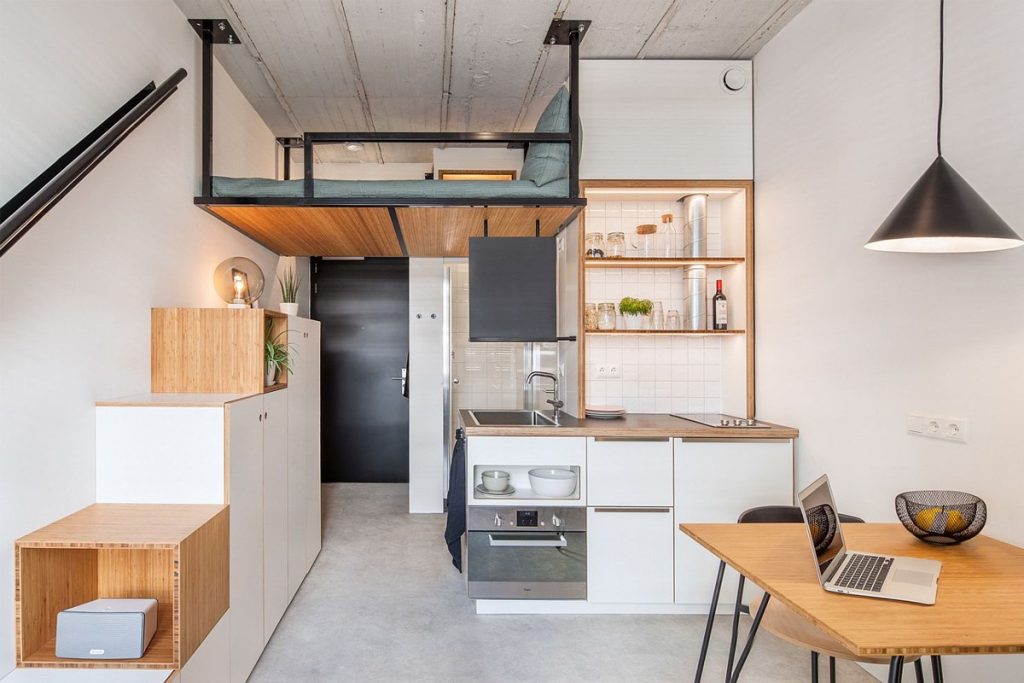
In homes with high ceilings, lofting the bedroom frees up valuable floor space below for a living area, workspace, or kitchen. Include built-in stairs with storage drawers or a compact ladder for access.
Best for: Tiny homes or micro-apartments under 400 square feet.
3. L-Shaped or U-Shaped Kitchen Open to Living Room
L- and U-shaped kitchen layouts maximize counter and cabinet space while keeping the kitchen open to adjacent living areas. Add a breakfast bar or island that doubles as dining space to eliminate the need for a separate dining room.
Best for: Compact family homes or small condos.
4. Split-Level Micro Layout
Split-level designs visually divide space without walls. For example, elevate a bedroom platform to create storage underneath, or step down into a living room area to define it.
Best for: Small urban plots with unique topography or indoor tiny homes.
5. Sliding Walls and Pocket Doors
Replace traditional swinging doors with pocket or sliding barn doors. These save several feet of clearance space and can be used to separate rooms when needed, offering flexibility in layout.
Best for: Small homes with multiple rooms or shared spaces.
6. One-Bedroom Plus Flex Space
Incorporate a dedicated flex space that can function as a guest room, home office, gym, or nursery depending on your needs. Use fold-out furniture or a Murphy bed to make this room adaptable.
Best for: Small families or couples who need occasional extra space.
7. Outdoor Living Extensions
When indoor space is limited, extend your usable area outdoors with a well-designed patio, deck, or balcony. Use folding glass doors or sliding panels to blend indoor and outdoor areas seamlessly.
Best for: Small homes in mild or warm climates.
8. Corner Windows and Skylights
To make rooms feel larger, maximize natural light with corner windows, clerestory windows, or skylights. Bright spaces feel more open, and strategic window placement reduces the need for artificial lighting.
Best for: All small home types looking to enhance light and openness.
9. Minimal Hallways
Hallways often waste precious square footage. Choose layouts that connect rooms directly or use open-concept transitions to eliminate the need for long corridors.
Best for: Tiny homes and narrow-lot houses.
10. Modular Add-Ons
Design your home with future expansions in mind. Modular designs allow you to add a room, office, or studio later as your needs evolve. These additions can connect via breezeways, decks, or shared walls.
Best for: Homeowners planning for long-term flexibility.
Tips for Designing a Small House Layout
To get the most out of your floor plan, keep these tips in mind:
- Scale matters: Choose furniture and appliances that fit the scale of your space. Oversized pieces will make rooms feel crowded.
- Use light colors: Soft, neutral colors reflect light and visually expand the space.
- Keep it clutter-free: Minimalism is key in small homes. Design built-in storage to reduce visible clutter.
- Mirrors work wonders: Use mirrors to bounce light and create a sense of depth.
- Consistent flooring: Use the same flooring throughout to create flow and unity.
Choosing the Right Layout for Your Needs
No two small homes are alike. Your layout should reflect your lifestyle, priorities, and future plans. Ask yourself:
- Do I work from home and need a private office space?
- How often do I entertain guests?
- Do I need a separate bedroom, or will a studio work?
- How much storage do I require?
- Can I go vertical with lofts or raised platforms?
Your answers will guide your layout decisions and help you avoid common mistakes, like overdesigning or underestimating space needs.
Conclusion
Innovative small house layouts make it possible to live large in a compact space. By embracing open concepts, multifunctional rooms, smart storage, and natural light, you can create a home that feels bigger than its square footage.
Whether you’re designing a tiny house, a city apartment, or a downsized family home, the right layout will make all the difference. With thoughtful planning and creativity, you can turn any small house into a functional, stylish sanctuary.
Add Comment