
Top 10 Smart House Layouts for Modern Living
A well‑designed home layout can transform daily life—optimising space, comfort, energy efficiency, and adaptability. As more people embrace smart home technologies and modern lifestyles, smart house layouts that integrate flexibility, sustainability, and intuitive design are in high demand. Here are the top 10 house layouts for modern living, plus tips on what to consider when choosing or designing one.
What Makes a Layout “Smart”
Before diving into layouts, it’s helpful to define what “smart” means in this context. A smart house layout typically includes:
- Flexible or multi‑use spaces
- Efficient use of natural light and ventilation
- Integration of smart technology (lighting, climate, security)
- Energy‑efficiency in design and materials
- Open and flowing connections between rooms
- Adaptability to changing needs (e.g. work‑from‑home, growing family)
These components ensure a layout is both future‑proof and tailored for modern comfort.
Top 10 Smart House Layouts
Here are ten layouts that embody modern, smart living. Each layout has its advantages and is suited to different needs and lifestyles.
1. Open‑Concept Floor Plan
An open‑concept layout connects the living room, dining area, and kitchen without walls dividing them. This design promotes social interaction, improves natural light flow, and creates a spacious feel even in smaller homes. It integrates modern living with ease of movement and allows for flexible furniture arrangements.
2. Split‑Bedroom Layout
In this layout, bedrooms are separated: master suite on one side of the house and secondary bedrooms on the other. This increases privacy, reduces noise disturbances, and is ideal for families, roommates, or multi‑generational living. Also helpful when some rooms are used at different times (e.g. guest rooms, home office).
3. Multi‑Purpose / Convertible Rooms
Smart layouts often include rooms that serve dual functions: home office that becomes guest bedroom; playroom that can convert to a gym; or dining area that doubles as workspace. This adaptability is especially important in modern living where needs shift over time.
4. Indoor‑Outdoor Flow
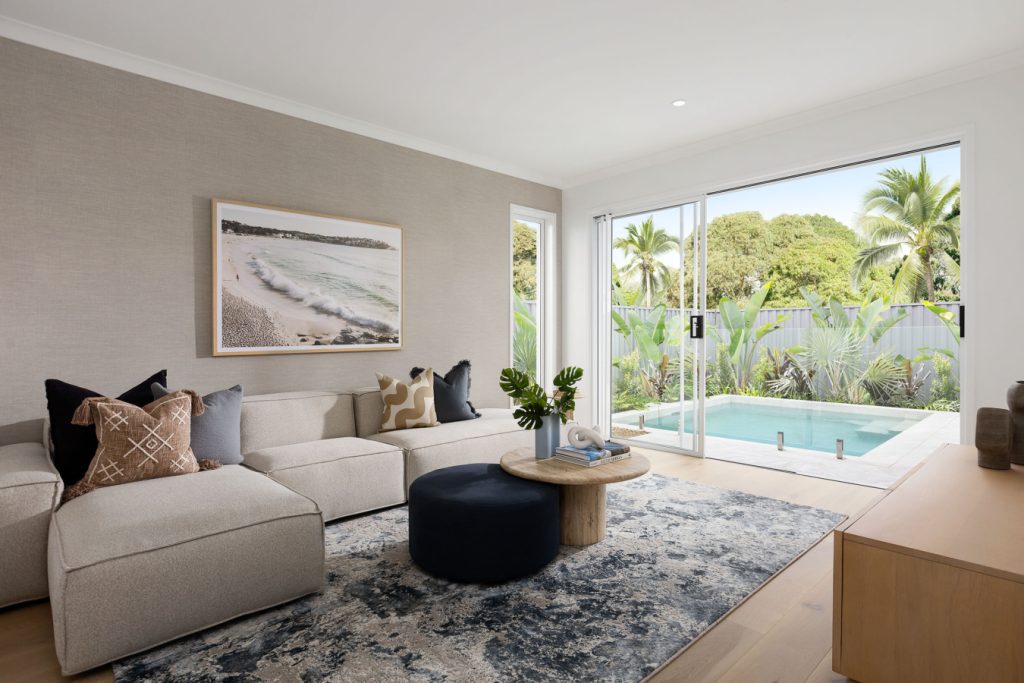
Incorporating sliding or folding glass doors, patios, decks, balconies, courtyards to extend living spaces outdoors. Homes with strong indoor‑outdoor connections make living more breathable, help with passive cooling, and enhance the sense of space. Gardening, entertaining, relaxing—outdoor spaces become an integral part of the home.
5. Central Courtyard Layouts
Having a central courtyard (open to sky or partially roofed) brings natural light into core areas that otherwise might be dark. It improves ventilation, offers outdoor privacy, and creates a focal point for the house. This layout is great in warm climates or where privacy from neighbouring properties is needed.
6. Narrow / Vertical Layouts
For lots with limited width or deep lots, vertical layouts (multiple levels) or narrow footprint designs make efficient use of land. Smart use of stairs, mezzanines, rooftop terraces helps compensate for smaller footprint. These layouts demand smart planning of light wells, windows, and stair positioning to avoid dark zones.
7. Zoned Layouts
Zoning separates public (living, dining, kitchen), private (bedrooms, studies), and service (laundry, storage, utilities) areas. Smart zoning provides better control over heating/cooling, sound, privacy. It allows people to move through one zone without disturbing others and reduces energy waste.
8. Passive Design Layouts
Build layouts that use orientation, insulation, thermal mass, roof overhangs, window placement to reduce reliance on heating/cooling systems. Incorporate cross‑ventilation, skylights, and daylighting. Passive design is one of the smartest layout strategies for modern living with environmental and cost benefits.
9. Smart Technology Integration
Homes that are pre‑wired or planned to accommodate smart devices: sensors for lighting, occupancy, heating; control hubs; energy monitoring; security systems. The layout needs to allow hidden wiring, central control points, accessible panels. Planning ahead avoids later disruptions or visible clutter.
10. Modular / Expandable Layouts
Layouts built to be modular: sections of the house that can be added, removed, or reconfigured. For example, adding an extra bedroom, converting garage space, or expanding for new functions. This type of layout anticipates future growth or changing needs and can save cost and effort over time.
How to Choose the Right Smart Layout for Your Needs
Choosing a layout isn’t one‑size‑fits‑all. Here are criteria to help you decide:
- Lifestyle and Family Size: How many people will live there? Do you often have guests? Do you need flexible spaces?
- Plot Size, Shape and Orientation: Land constraints affect what layouts can work. Narrow lots favour vertical or narrow‑footprint designs. Orientation determines daylight and passive heating/cooling potential.
- Climate and Environment: Hot, cold, humid, or dry climates demand different passive design strategies. Indoor‑outdoor flow is more usable in mild climates.
- Budget Constraints: Smart technology, high performance insulation, large windows, etc. all impact cost. Some features cost more up front but may save later (energy, maintenance).
- Future Adaptability: Think long term—career changes, expanding family, working from home. Choose layouts that can adapt without costly major renovations.
Add Comment